Hair Topper Guide for Thinning Hair Find Coverage Volume and Confidence

A widening part can change how hair feels every morning. So can thinning at the crown, reduced density around the front, or visible scalp under bright light. A full wig isn’t always the right answer. For many people, a topper gives targeted coverage while letting existing hair stay part of the style.

A hair topper covers thinning areas without a full wig
A hair topper is a partial hairpiece designed to cover specific areas of thinning hair. It usually sits on the top, crown, part line, or front hairline area. Unlike a wig, it does not cover the entire head.
Most toppers attach with small pressure clips, combs, adhesive, tape, or another method chosen for the client’s hair and scalp needs. The topper blends with existing hair to create fuller-looking density.
That’s the main reason people look at hair toppers for thinning hair. They want coverage, but they still want to see and use their own hair.
A topper may help with:
A widening part
Visible scalp at the crown
Thinning near the front hairline
Reduced density after shedding
Fine hair that no longer holds volume
Medical or stress-related hair loss, when appropriate
Hair loss can come from many causes. Hormonal changes, genetics, stress, illness, medication, and scalp conditions can all play a role. The American Academy of Dermatology recommends seeing a board-certified dermatologist for sudden, patchy, painful, or unexplained hair loss. A topper can help with appearance, but it does not diagnose or treat the cause.
The right topper depends on where coverage is needed
A topper should match the area of concern. A small part-line topper will not give enough coverage for broad crown thinning. A large base may feel like too much if only the front needs help.
Think about these points before choosing.
Coverage area
Look at where scalp shows most. Is it the part, crown, front, or all over the top? The base size should cover the thinning zone and sit securely on stronger hair when clips are used.
Hair density
A natural result usually comes from matching the density of nearby hair. Too much hair can look heavy. Too little may not solve the coverage issue.
Hair length and texture
The topper should blend with existing hair length, wave, curl, and movement. A stylist can often cut and shape it so the transition looks softer.
Color match
Good color matching is more than “brown” or “blonde.” It includes tone, highlights, lowlights, root color, and how the hair looks in natural light.
Base type
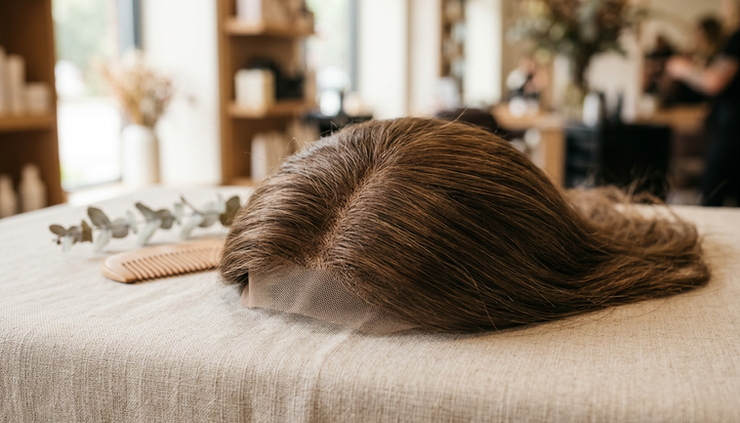
Some bases look more like scalp. Some breathe more. Some give stronger coverage. Lace, mono, silk, and other construction types each have a different feel and look.
A natural look comes from fit, color, and placement
Most concerns come down to one question: “Will people know?”
A natural-looking hair topper starts with the right fit. The base should cover the thinning area without sitting too far forward, too far back, or too wide across the head. Placement matters as much as the piece itself.
Color also carries a lot of the result. If the topper is warmer, cooler, darker, or shinier than existing hair, the eye catches the difference. Blending work can include trimming, layering, soft face framing, or toner when the hair type allows it.
The front area needs special care. If natural hair remains at the hairline, it can often be blended forward or around the topper. If the front hairline is thin, a different base or attachment style may work better.
A professional fitting can help answer the details that are hard to judge online:
Does the topper sit flat?
Does the part look believable?
Do the clips feel secure?
Does the density match daily life?
Can the style move without exposing the base?
Photos help, but trying options on gives better answers. That’s where All That & More Hair can guide clients through choices instead of leaving them to guess from product pictures.
Comfort and everyday wear should guide the final choice
A topper has to feel wearable, not just look good in a mirror for five minutes.
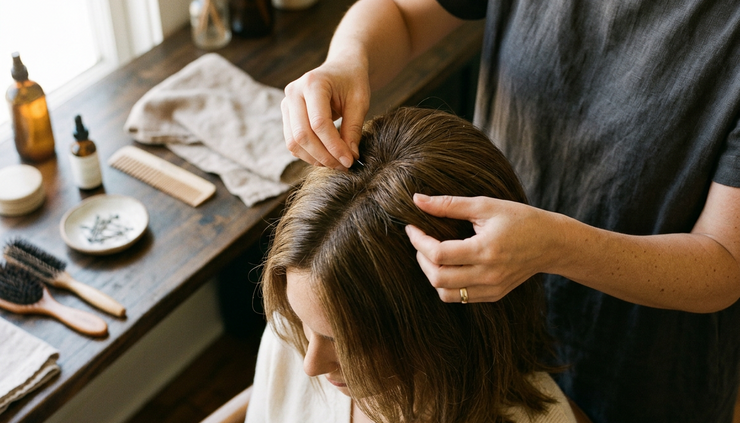
Comfort starts with attachment. Clips are common and simple, but they need enough strong hair to hold them. If the hair is fragile, tender, or very sparse, another method may be better. Some clients prefer removable daily wear. Others want a more secure option for longer wear, depending on lifestyle and hair condition.
Daily routine matters too. A topper worn to work, church, errands, family events, workouts, or dinner needs to match real life.
Ask yourself:
How much time is okay in the morning?
Some toppers clip in quickly after practice. Others need more styling time.
Will heat styling be needed?
Human hair toppers often allow more styling flexibility than synthetic pieces. Synthetic hair can be lower maintenance, but heat rules vary by fiber.
How often will it be cleaned?
Washing too often can shorten the life of any hairpiece. Waiting too long can affect comfort and appearance. Care instructions should match the topper type.
Will it feel secure outside the salon?
A good fit should handle normal movement. The goal is confidence during daily wear, not constant checking.
Professional guidance can save time and frustration
Buying a topper without help can lead to common problems. The color is close but not close enough. The clips pull. The base is too small. The density looks too full. The piece looks fine in a photo but not in person.
All That & More Hair helps clients look at the full picture: hair concern, coverage area, lifestyle, comfort, desired style, and next step. That may be a virtual consultation, a private try-on transformation experience, a custom hair-loss fitting, or another service.
This is especially helpful when the goal is to keep existing hair integrated. A topper is not one-size-fits-all. The best option should suit the person wearing it.

Start with a complimentary Hair Solutions Review Call, free for first-time clients.
During the call, All That & More Hair will discuss your primary hair concern, your desired outcome, and which next step may best fit your needs. This call can help determine whether a virtual consultation, private try-on transformation experience, custom hair-loss fitting, or another service is the right place to begin.
A topper can be a practical middle ground between doing nothing and wearing a full wig. With the right fit, color, coverage, and support, it can add volume where it’s needed and help hair feel easier to wear every day.
Comments